


In 2026, website speed is a critical revenue variable no dealership can afford to ignore. If a dealer’s website has slow load times, it means their potential buyers are getting frustrated with the experience, causing them to leave. Thus, a slow website is eating into their revenue, damaging trust and reputation, and suppressing organic ranking.
Slow websites are costing dealerships a lot of money. Most dealerships do not see the damage till they experience a dip in the number of leads and a sudden increase in the cost per acquisition.
In this post, we aim to throw light on the real damage a slow website does to a dealer’s bottom line.
Some Data That’s Impossible to Ignore
Let’s look at some numbers from 2025-26 that point in one direction: how a slow website is negatively impacting your dealership.
- The 2026 Automotive Mobile PageSpeed Study, analyzing nearly 90,000 organic search results across 250 of the largest U.S. markets, revealed 92% of local dealership domains fail to meet Google’s mobile speed requirements, with nearly 70% operating entirely in the poor tier.
Mobile accounts for a huge portion of automotive shopping sessions. If a dealership fails to meet this benchmark, it will lose a considerable amount of business.
- The 2025 Digital Automotive Shopping Pulse Report shows how advertising is impacted. The report revealed that dealership websites fail the Core Web Vitals and waste $30 of every $100 spent on ads. This is a structured drain where the dealer is losing money even before the visitor sees the ad page.
The organic search penalty is another cost that the dealership has to bear. The Overfuel research identified a statistical correlation (r = -0.922) between PageSpeed scores and Google search rankings. It found that position one captures nearly 22 times more traffic than position ten.
The difference between a technically sound site and one poorly built is the same as being found on Google and being completely invisible.
Where is the Dealership Losing Money?
Page speed frustrates visitors, interfering with their buyer journey throughout the entire website.
Vehicle Detail Pages
For dealerships, having robust vehicle detail pages (VDP) is critical as these are purchase intent pages. Visitors landing here have already moved past general browsing and want quick, hassle-free access to photos, price, availability, specifications, and location.
This means these pages shouldn’t take more than three seconds to load. If the page loading time is any longer, prospects will bounce. They won’t submit lead details, they won’t call, and worse still, they will move to a competitor.
Paid Search and Display Campaigns
Dealerships spend a considerable amount of money on paid ads to get potential buyers to click. Imagine a scenario where a visitor clicks on the ad and lands on a slow page. It frustrates the visitor and immediately leads to a wasted click.
A low Google Quality Score is costing dealerships money per click and leading to fewer conversions. Further, Google penalizes landing pages that offer a poor experience to users.
A dealership running many Google Ads to their VDPs that are then failing the Core Web Vitals is paving the way for losing customers.
Lead Forms and Digital Retailing Tools
High-value conversion points for dealers can include trade-in estimators, financing calculators, and appointment schedulers.
If these tools are embedded on slow web pages or rely on scripts hosted by third parties that slow down the page load time, completion rates drop. The delay due to these tools causes originally warm leads to leave the website and visit a competitor, taking their data with them.
SEO and AI Discovery
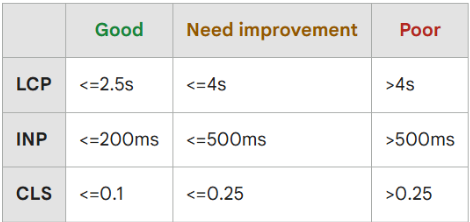
Google’s Core Web Vitals (CWV) are a sure-shot ranking signal every website must optimize for. A website that performs poorly on CWV metrics – Largest Contentful Paint (LCP), Interaction To Next Paint (INP), and Cumulative Layout Shift (CLS) – is at a huge disadvantage for ranking in the search engine results pages (SERP).
Besides, AI search models increasingly favor structured and fast-loading content. McKinsey research reveals that half of the buyers today use AI-powered search to learn about products and services.
A poor website experience can reduce its visibility in AI search engines, where most of the high-intent shoppers are beginning their buying journey.
What’s Stopping Dealers from Fixing Slow Pages
There are a few common barriers that cause issues for dealers when trying to fix a slow website.
Platform Dependency
Many dealerships run their websites on OEM-mandated or vendor-managed platforms. In these cases, dealers have less control over the website template architecture, third-party script loads, and image optimization. The platform is locked.
Fixing the Core Web Vitals metrics then often requires a migration conversation that gets deprioritized against more immediate operational demands.
These issues are best handled by experts. Some dealerships try to address this issue by trusting a white-label web development agency to build on existing platforms. These agencies can also execute complete migrations without the need to increase in-house headcount.
Faulty Attribution of the Issue
When a lead is lost, the most common reasons dealers assume are ad budget, inventory mix, or market conditions.
Website performance impacts conversions on almost every channel. Yet, most dealers don’t immediately think about improving website performance as a conversion effort.
Many dealers do not even have a dashboard connecting site performance to the leads generated/cost of acquisition. Without this data, they fail to catch the deteriorating CWV scores and the declining vehicle detail page conversions.
Script Bloat
Dealership websites tend to collect third-party tools like widgets, pixel trackers, video players, retail modules, and review integrations over time. Each of these tools causes incremental bloat and adds to the load time. It is a cumulative impact with each vendor addition.
Most legacy platforms perform well on clean pages; however, they tend to fail once OEM-required tools and third-party scripts are added. This means dealers are tracking performance scores that aren’t a true reflection of real user experience.
What a Performance-first Approach Actually Looks Like
Here are a few measures dealerships should take to improve their website performance.
Audit the Current Performance with Real Data
Google Search Console (GSC) and PageSpeed Insights offer field data, which is the real performance of the pages as experienced by the site visitors. These are different from the lab scores.
In GSC, Core Web Vitals reports by page type, allowing dealers to pinpoint the exact VDP, SRP (Search Results Page), or the homepage, that is the source of poor performance.
Negotiate Performance SLAs with Website Vendors
Most dealer website agreements do not include performance benchmarks. Dealers must emphasize contractual Core Web Vitals thresholds, LCP under 2.5 seconds, and CLS below 0.1 with precise remediation timelines.
Contractual accountability is key to ensuring vendors stick to the performance standards.
Audit and Rationalize Third-party Scripts
Make sure each script tag on your website is there because it’s needed. Perform a structured tag audit to identify tools that are unused, outdated, or replaceable with a lighter alternative.
Routine tag audits prevent script debt from eventually impacting website performance.
Prioritize Mobile Experience
For the modern buyer, desktop performance scores feel irrelevant, especially when most of the automotive research is being done on mobile devices. Ensure all performance testing is done on mobiles and mobile network conditions.
Connect Website Performance to Revenue Reporting
Tie the website performance to a business outcome; that way, it becomes a manageable variable and an operational priority. For instance, tie it to metrics like lead volume, cost-per-acquisition, and VDP views.
Summing Up
Dealers aiming for better conversion rates and a healthy lead pipeline must invest in improving their website performance. This will not just improve user experience and online rankings but also boost their conversion rates and revenue.
Related Stories: