


Two Federal Trade Commission documents published within a month of each other are worth reading side by side. The first, the agency’s pricing transparency FAQs for the auto industry, published Sept. 15, says the advertised price must be “the actual price any consumer can walk in and pay.” It also allows conditional discounts, such as a “$1,000 discount for first responders,” as long as the walk-in price is the most prominent number in the ad. The second, a proposed enforcement policy statement on personalized pricing released Aug. 19, deals with prices set from a shopper’s personal data, including individualized discounts that change the price a shopper is offered.
According to the proposal, “Where consumers reasonably expect that prices for a product or service will not vary based on their personal data,” a business should disclose that the price is personalized, the basis for it and the types of data behind it. In the Commission’s words, “The failure to make these disclosures is likely to constitute an unfair or deceptive act or practice” under Section 5 of the FTC Act. The comment period closed Sept. 25, and the statement is still a proposal, but it indicates how the current Commission is thinking about Section 5 enforcement in this area.
Where Dealer Discounts Fall
Most dealers already work with rule-based discounts every month through manufacturer loyalty, conquest, college-graduate and military programs, which typically use defined eligibility criteria and predetermined incentive amounts for a particular program, vehicle and period. A sales manager can usually tell a customer exactly why she qualified.
The harder case is the discount nobody at the store actually wrote, such as a website pop-up, a retargeted email or a digital retailing discount that a CRM or customer data platform generates from browsing history, location data or a modeled likelihood to buy. A manager may not know how that discount was generated when it reaches the deal jacket. Financing and payment quotes are a different matter, governed by separate credit and fair-lending rules, and should be analyzed on their own.
The proposal also describes consumers who believe a personalized price “is a discount based on their purchase history with that retailer” when it actually reflects other personal data, a point that matters for any dealer presenting a personalized price as a loyalty benefit.
States have also begun regulating personalized and surveillance pricing through different approaches, starting with New York’s algorithmic pricing disclosure law, which took effect on Nov. 10, 2025. Subject to statutory exceptions, a business that uses covered personalized algorithmic pricing must display “THIS PRICE WAS SET BY AN ALGORITHM USING YOUR PERSONAL DATA” next to the price, and noncompliance can result in penalties of up to $1,000 per violation. The legislature passed the broader One Fair Price Act in June; as of Oct. 11, it has not been signed into law. Connecticut’s surveillance pricing law, signed June 4, goes further than a disclosure rule: beginning July 1, 2027, it will generally prohibit retail sellers from engaging in surveillance pricing, subject to exceptions.
Deterministic Segmentation for Dealer Discounts
Deterministic segmentation is one way for a dealer to run targeted discounts the way a manufacturer program runs. Customers are assigned to defined, non-overlapping segments by explicit rules, and each segment is tied to a set discount off the advertised price, so the same facts about a shopper always produce the same result. Data and models can still inform how a dealer designs a program, but if personal data determines which segment an individual shopper enters, the resulting discount may still constitute personalized pricing. Making a rule deterministic does not by itself take a discount outside personalized-pricing law; the underlying criteria and disclosures still matter.
A Five-Step Path for Dealers
1. Classify
List every price and discount a shopper can see, from the vehicle detail page and e-price to chat, BDC texts, email and the digital retailing desk. Sort each one into three groups: the same for everyone, conditional on published eligibility, or varying with the shopper’s personal data. The proposal flags personal data used “without sufficiently verifying that consumers consented” to its collection, so data that arrives through a vendor deserves a close look. Variables such as ZIP code also deserve additional review, because they may correlate with protected characteristics and, depending on how they are used and which laws apply, can create discrimination risk.
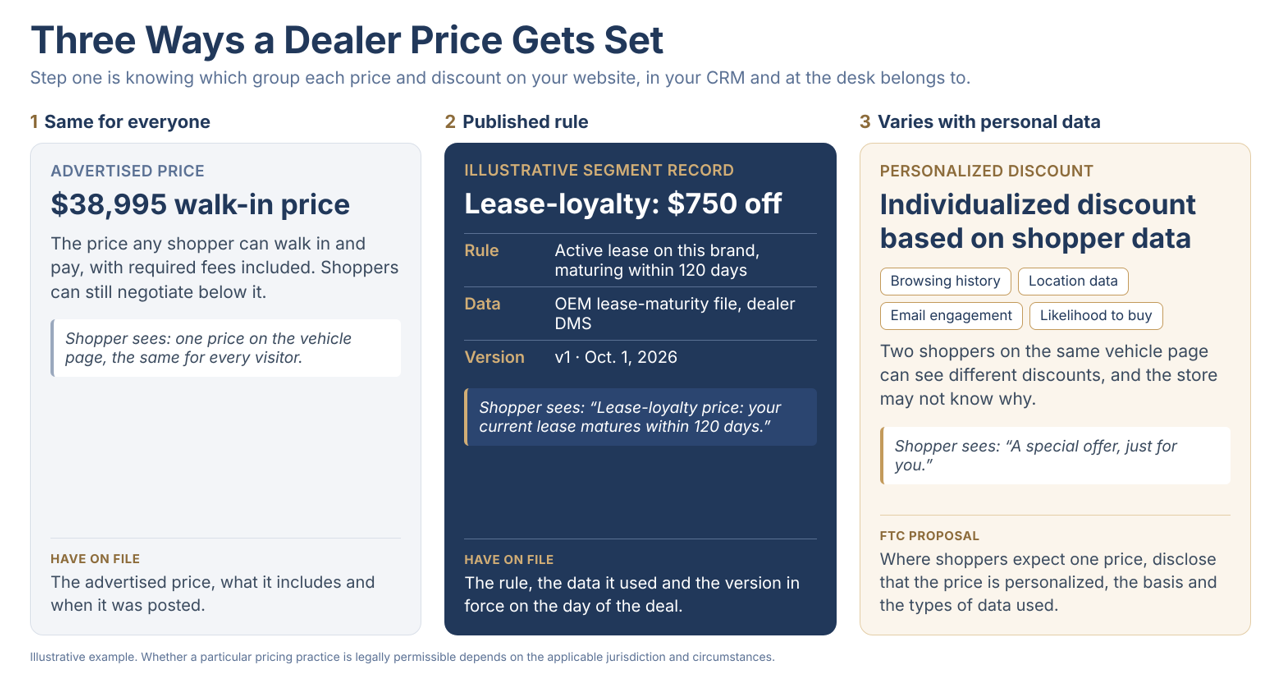 Figure 1: Three ways a dealer price gets set.
2. Audit
Pull last quarter’s results for discounts in the third group and look at who received what. A dealer concerned about potential discrimination issues may want counsel to direct the review, so that privilege and work-product protections can be considered where applicable.
3. Segment
Rewrite each discount you keep as a short rule with a fixed amount off the advertised price. A franchise store’s dealer-funded lease-loyalty discount might read:
Segment: Current brand lessees
Rule: Active lease on this brand that matures within 120 days
Data: Manufacturer lease-maturity file and dealer DMS
Source: First-party and manufacturer
Treatment: $750 dealer discount off the advertised price, in addition to any manufacturer incentive
Version: v1, effective Oct. 1, 2026
4. Disclose
Keep the walk-in price as the most prominent number, as the FAQs call for when a discount appears in an ad, and state the reason for the discount in plain words: “Lease-loyalty price: your current lease matures within 120 days.” If a price still depends on personal data in the way the proposal describes, then under the proposed policy the FTC would expect disclosure of that fact, the basis and the types of data used.
5. Govern
Keep every rule in a versioned registry, and ask each vendor to show, in writing, the rule and data behind any discount its tool presents. For California dealers, a versioned pricing registry can also serve as one component of compliance with the CARS Act’s separate two-year recordkeeping requirements for specified pricing, transaction and add-on records.
Start With One Customer
Deterministic treatment is not a safe harbor, since a consistently applied rule can still create discrimination, privacy, credit or state-law problems depending on the data it uses and where the dealer operates, and counsel should review the criteria. Its value is that it gives the dealer a documented answer to an important question in any later review: why did this shopper see this price or discount? Pick one customer from last month and check whether anyone at the store can reconstruct, from records, why she saw the price she did.
Related Stories: