


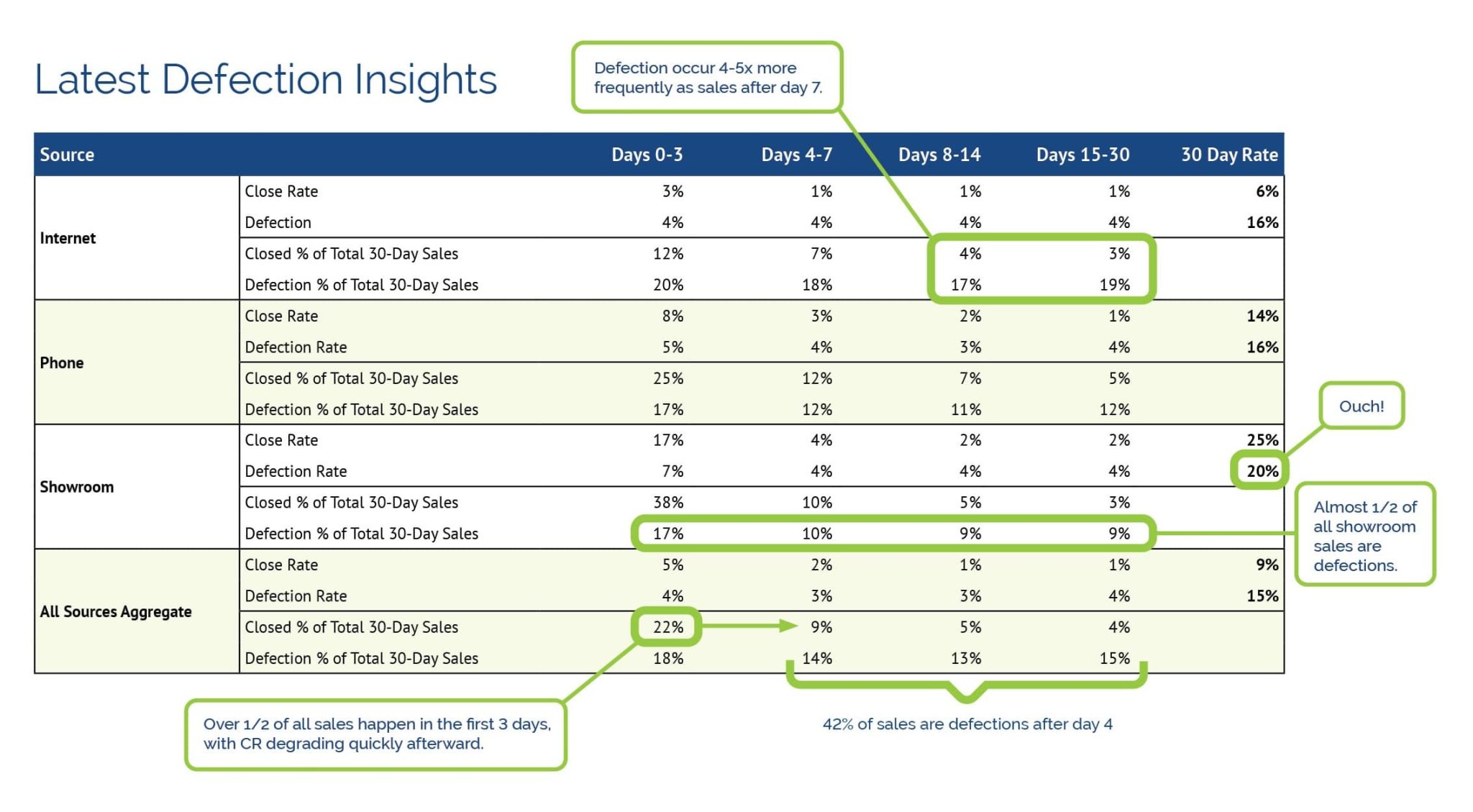
Even the highest-performing sales teams can’t close every deal. Auto buyers routinely cross-shop dealerships, and affordability concerns continue to influence the extent to which buyers compare options, pricing and other deal attributes before committing to a sale. Under these conditions, it’s inevitable some leads won’t convert. In fact, according to Urban Science’s daily defection (lost sales) data, defections outnumber close rates by almost two to one.
While lead defection is a natural part of doing business in automotive retail, it doesn’t mean dealers should ignore it. Buyers defect at different points of the purchase journey and for different reasons, and each defection serves as a signal into where and why the sales process may be falling short. When dealers have the data and context to interpret those signals, patterns and underlying issues at their stores, they can use those insights to detect and address breakdowns in their sales and outreach processes.
The Visibility Gap in Lead Tracking
Customer relationship management platforms lose visibility of lead status once a prospect stops responding, making it impossible to determine whether they went on to make a purchase or simply left the market. Daily defection data extends dealers’ visibility into buyer behavior, showing when a customer purchases from a same-brand or competitive dealership. Dealers can use that information to identify where there may be “hidden leaks” in the sales process and take targeted action to close those gaps, adjust follow-up strategies, refine lead handling by source and reallocate resources to opportunities most likely to convert. By addressing those hidden leaks, dealers can boost sales and future revenue. Urban Science’s data shows highly engaged users realize an additional six vehicle sales per month by acting on defection insights.
Research from the 2025 Urban Science Harris Poll Study shows just how much of a challenge visibility into defection has become for dealers. While 82% of dealers say leads are more important to their dealership’s business today compared with five years ago, 74% report dissatisfaction with their ability to know if a lead has defected. Without clarity, sales teams waste time and resources continuing to follow up with buyers who have purchased elsewhere. The average sales team wastes over 100 hours a month chasing dead leads, rather than focusing solely on customers who are still in-market. Meanwhile, dealers risk overlooking gaps in their sales process that could be seriously impacting their profitability.
Using Defection Data to Address Sales Process Breakdowns
While no two customer journeys are entirely alike, the reasons why prospects defect are often consistent. Sales losses are often driven by a small number of recurring issues commonly shared across dealerships.
A Misaligned Digital Experience
The majority of buyers start their shopping journey online, which means a confusing or frustrating digital experience could lead to early defections. Today’s auto buyers seek transparent pricing, clear inventory availability and a seamless digital experience that makes it easy to compare options, ask questions and move confidently toward their purchase. Daily defection data shows which vehicle makes and models are associated with the most defections at an aggregate level. This visibility provides a touchpoint for dealers to refine their marketing spend to drive high-quality leads and enhance ROI.
A Drop-Off in Follow-Up
Some auto buyers make their purchase quickly, but others remain in-market for 30, 60 or even 90 days. Most sales teams do a good job of engaging prospects who are ready to purchase immediately. However, they may be inadvertently neglecting buyers who need more time or guidance to complete their purchases, and when follow-up ends too early, buyers often continue their search elsewhere.
Daily defection data shows when customers ultimately buy a vehicle, allowing dealers to better understand the path to purchase and identify where follow-up drops off. With that insight, teams can adjust their outreach cadence or engage AI to maintain consistent engagement throughout the purchase journey. For instance, Urban Science’s defection insights show while dealership teams, on average, close 25% of showroom leads within 30 days, another 20% defect. By extending and strengthening follow-up with in-market shoppers who have not yet purchased, dealers can improve conversion rates on future leads and drive measurable revenue growth.
Inconsistent Treatment of Lead Sources
Buyers behave differently depending on how they enter the shopping funnel. Internet leads, for example, behave differently from customers who reach out via phone or walk into the showroom from the street. Daily defection data enables dealers to compare close and defection rates by lead source, allowing them to see whether salespeople are converting certain types of leads effectively or struggling with others. They can use that information to deliver targeted coaching (for instance, to strengthen phone or digital follow-up) rather than relying on broad, one-size-fits-all training.
Getting the Full View of Sales Performance
Dealers often respond to a shortfall in sales by purchasing additional leads. However, if they don’t understand why their existing leads failed to convert, the approach is likely to drive up costs without addressing the root cause. Daily defection data helps dealers determine whether lower conversion rates stem from lead quality issues or from breakdowns in the sales process.
Insight into defection also matters when a dealership’s close rates are healthy. For example, if a dealer’s sales team is achieving consistently high close rates, they might assume their salespeople are engaging leads effectively. That being said, defection data could reveal the team had mishandled leads that were converted at another dealership, exposing missed opportunities to make sales and capture revenue.
Lost sales cannot be eliminated entirely, but dealers have great opportunity to reduce — and learn from — their losses. By leveraging daily defection data, dealers can turn lost sales into opportunities for improvement, empowering their teams to strengthen execution, boost retention and compete more effectively for market share.
Related Stories: